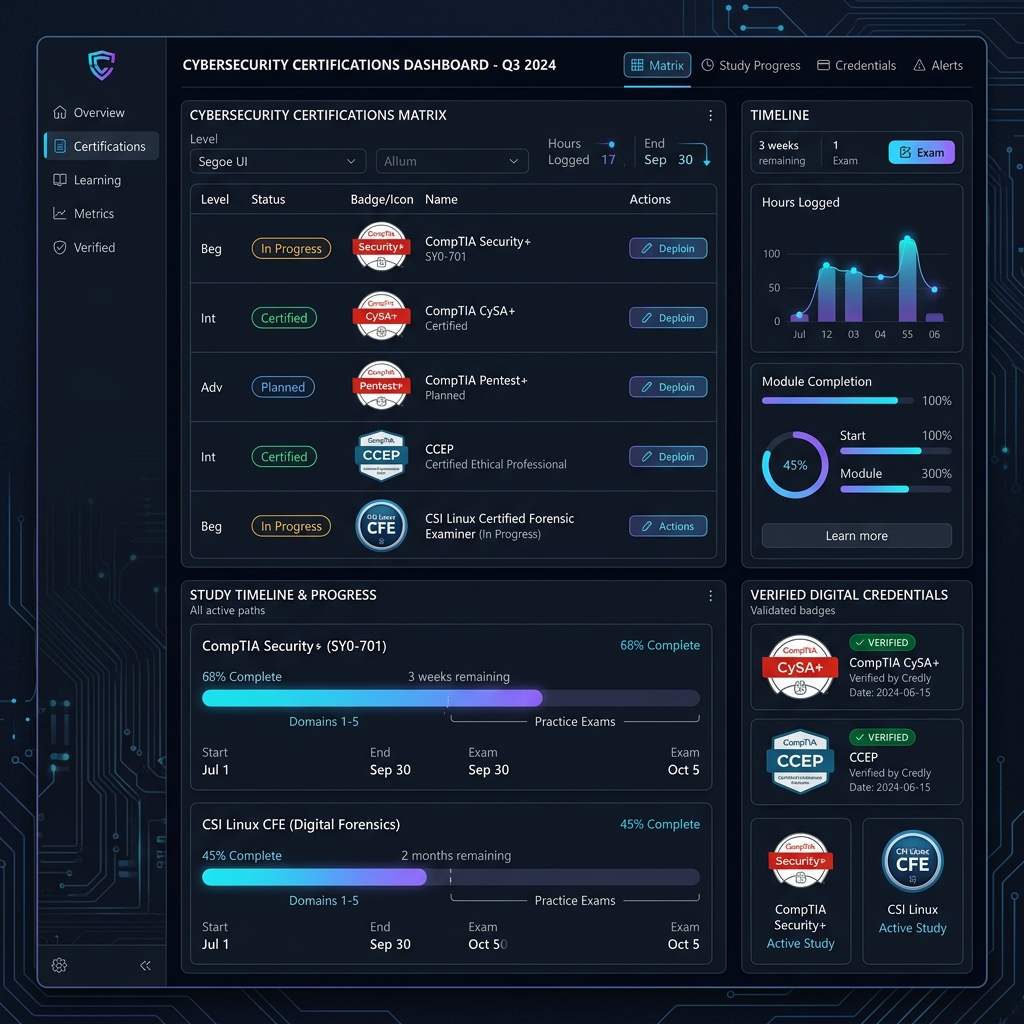
I earned 17 certifications and credentials while studying for my cybersecurity degree. That number sounds impressive, and recruiters do notice it, but the honest story is more nuanced than a trophy count. Some of those certs changed how I think. Others were a weekend and a quiz. Here is what I actually learned about certifying as a student, so you can spend your time better than I sometimes did.
Do Certifications Even Matter?
For a student with a thin work history, yes, but not for the reason people assume. A certification rarely makes you an expert. What it does is two things: it gives structure to your learning, and it gives a recruiter a reason to keep reading your resume. Many application tracking systems filter on exactly these keywords. Early in a career, certs are less a proof of mastery and more a signal that you are serious and self directed.
The One That Mattered Most
Not all certs carry the same weight. The single most valuable one in my stack is CompTIA PenTest+, because it is vendor neutral, recognized by hiring managers, and covers the full penetration testing lifecycle rather than a single tool. If you are aiming at offensive roles, a recognized name like PenTest+ or Security+ clears more HR filters than a stack of niche course certificates ever will. Study for the credentials that recruiters search for first.
The Trap Worth Avoiding
Here is the part most cert guides skip. It is easy to fall into certificate collecting, where you rack up short course completions because finishing one feels productive. The dopamine is real and the learning is shallow. A weekend course that ends in a multiple choice quiz is fine for exposure to a topic, but do not mistake it for depth. One certification you can defend in an interview beats five you cannot explain. If you cannot talk for ten minutes about what a cert taught you, it is decoration, not evidence.
A Sane Order for Students
If I were starting again, I would sequence it like this:
- A broad foundation first. Something that covers networking, threats, and core security concepts. This makes everything afterward easier.
- A recognized, role aligned cert. For offensive work, PenTest+. For blue team, a SOC or threat hunting focused credential. This is the one you put at the top of your resume.
- Targeted depth. Short courses in the specific skills your target role uses, such as reverse engineering, digital forensics, or threat intelligence, to round out the picture.
Breadth then a flagship then depth. That order builds a coherent story instead of a random pile.
How I Studied Efficiently
Balancing certs with a full course load forced discipline:
- Learn by doing, not just watching. I paired every theory topic with a lab on TryHackMe or a home VM. Concepts stick when you type the commands.
- Take notes you will reuse. My study notes became a personal reference I still search today.
- Batch related topics. Studying malware analysis and reverse engineering together, for example, because they reinforce each other.
- Schedule the exam before you feel ready. A real deadline ends infinite preparation and forces focus.
Make the Cert Earn Its Keep
A certificate sitting in a folder does nothing. I make each one work by writing about what it taught, building a small project that uses the skill, and adding the concrete capability, not just the badge, to my resume. The hiring conversation is never “you have this cert.” It is “tell me what you can do,” and the cert is only useful if it maps to a real answer.
Key Takeaways
- Certs give structure and clear resume filters, especially early on.
- Prioritize recognized, role aligned credentials like PenTest+ over niche badges.
- Avoid certificate collecting. Depth you can defend beats breadth you cannot.
- Sequence them: foundation, then a flagship, then targeted depth.
- Pair every cert with hands on practice and turn it into a real skill.
The number on my resume opens a door. What I can actually do is what walks me through it. Build the second thing and the first takes care of itself.
// Discussion